 NEWSLETTER SIGN-UP




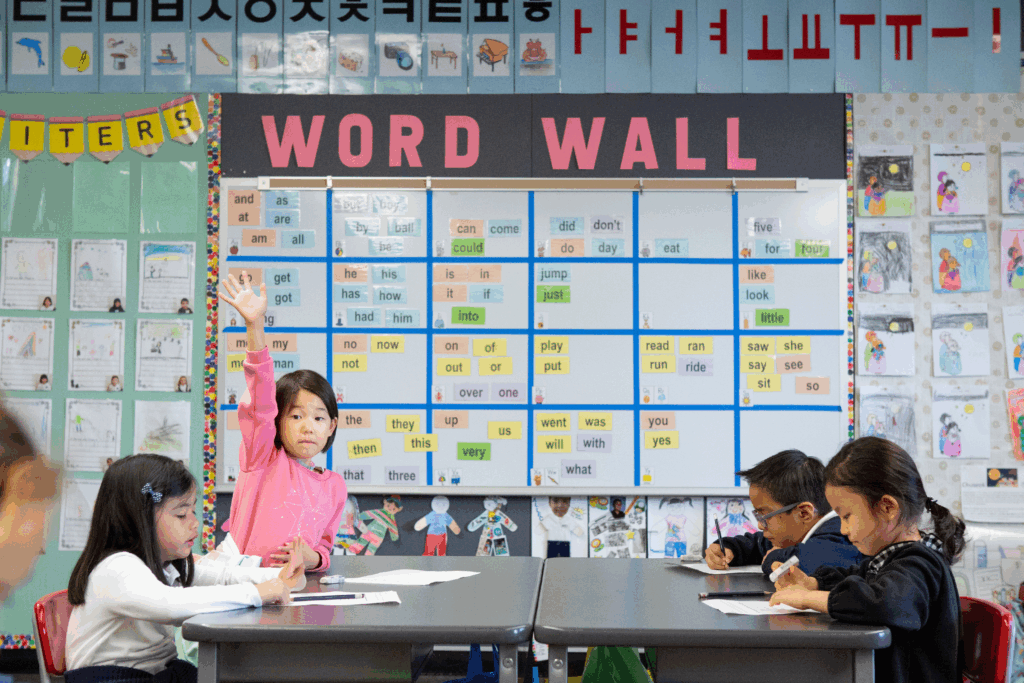
Photo by Allison Shelley for American Education: Images of Teachers and Students in Action
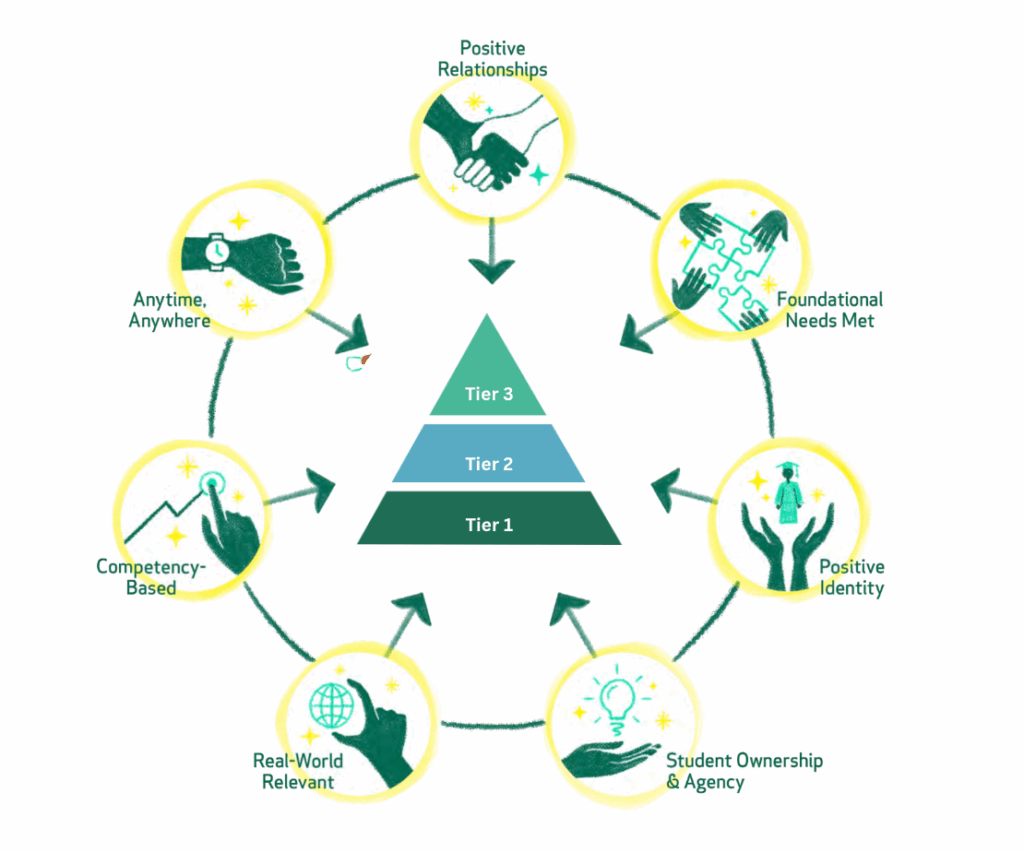
Education Evolving identifies seven principles of student-centered learning that, when fully realized, create an equitable learning environment for all students. These principles include: positive relationships, foundational needs met, positive identity, student ownership and agency, real-world relevant, competency-based, and anytime, anywhere learning. Implementing these principles into practice is a challenge. Where should schools begin? What programs, systems, and practices need changing? What needs to be introduced?
One approach to incorporating student-centered learning principles into schools is through their Multi-Tiered System of Supports (MTSS). MTSS is a national initiative aimed at ensuring that students receive the intervention and services they need to learn and grow. While each state defines and implements MTSS differently, there are common elements, such as a tiered system to support students, data-informed decision making, evidence-based interventions, and early identification of student needs.
The tiered system of support is one of the most common aspects of MTSS, articulating the varying levels of support. There are typically three tiers: Tier 1 are supports that all students receive. Even with well-established Tier 1 supports, some students will need additional Tier 2 supports, and a few students will need more individualized Tier 3 supports. Staff determine the level of support a student receives through frequent monitoring and the use of multiple data sources.
MTSS is also used as a framework and strategy for school improvement. MTSS, combined with student-centered learning principles, ensures that the schools are designed to be equitable places where all students receive the opportunities, supports, and services they need to learn and grow.
Tier 1: The Foundation of Student-Centered Learning
The student-centered learning principles articulate Tier 1 practices that lay the foundation for an equitable learning environment. The principles broaden Tier 1 programs and supports to consider students’ identities, cultures, relationships, passions, and dreams. This foundation is necessary to ensure that Tier 2 and Tier 3 supports are inclusive and effective.
For example, having a foundation of competency-based practices (principle 6) allows staff to accurately identify students who need additional support, not based on cultural bias or behaviors, but based on meaningful learning goals.
When designing Tier 1 programs using the student-centered learning principles, here are some suggestions to consider:
- Design Inclusive Programs: Design Tier 1 programs that center on various aspects of students, such as identity, culture, language, interests, hobbies, and challenges. They should also consider the diverse goals of students in the areas of academics, socio-emotional, behavior, college, and career. In other words, Tier 1 is not just about academic supports; it’s about designing programs, opportunities, and supports that uplift the whole child.
- Ensure Active Participation: Implement Tier 1 programs with systems that ensure that all students actively engage in the programs and not just a few students. For example, if a school’s internship program (real-world relevant, principle 5) is offered to all students but only a few high-performing students participate, then new systems are needed to help all students participate.
- Focus on Student Outcomes: Evaluate Tier 1 programs based on the student outcomes. An effective Tier 1 program should result in a majority of students demonstrating positive outcomes. For example, if 60% of students report not having a strong relationship with other students (positive relationships, principle 1), it is essential to include Tier 1 opportunities for community building.
Tier 2: Interventions Guided by Student Agency
Even with strong Tier 1 practices, some students will need additional support. Typically, Tier 2 interventions are characterized as academic or socio-emotional programs delivered through targeted small-group instruction, such as small-group reading interventions, after-school tutoring, or a social skills group.
Because Tier 2 interventions are typically delivered in groups or by standardized programs, students may feel like the supports are imposed on them. Therefore, it is essential that there is dedicated time for students to take ownership and agency (principle 4) of their learning goals. Here are some questions that educators can ask:
- Tell me about your experience at school. What do you like and dislike about school?
- What are your goals for this year? What are your long-term goals?
- What support do you think would help you achieve your goals?
Tier 3: Identify-Affirming Integrated Services
Throughout students’ educational journeys, some may need Tier 3 services. These services are highly individualized and require the coordination of multiple staff members to provide integrated services. Some students may need additional services to address unstable housing needs, while others may need extra support to manage temporary challenges such as a medical procedure. Tier 3 services are most effective when designed upon a strong Tier 1 foundation of student-centered principles.
For instance, flexible learning opportunities (principle 7), competency-based grading practices (principle 6), and a strong sense of community (principle 1) are all Tier 1 practices that ensure that students needing Tier 3 services are receiving integrated services within an equitable and nurturing learning environment.
Many times, students who need Tier 3 services are those who are the most marginalized in their communities. This may include students with dis/abilities or newcomer students who recently arrived in the country. Therefore, it is essential that Tier 3 services are designed to center the student’s identity, culture, and values (principle 3), along with their dreams and goals.
This approach ensures that Tier 3 services do not take on a deficit approach that further marginalizes students, but instead cultivates a sense of positive identity for the student as they navigate challenging circumstances.
Designing and Implementing a Student-Centered MTSS
Student-Centered MTSS cannot be realized through the mandate of one leader or the hard work of one department. It requires that the teachers, staff, families, students, and community partners work together to design and implement effective learning programs, interventions, and services. Here are some tips on how to get started:
- Focus on developing a strong Tier 1 foundation by giving teachers the space and resources to lead the design and implementation of student-centered learning principles.
- Create advisory councils that include students and families to provide input and advise on the development of their MTSS.
- Form support teams comprised of service providers, school staff, and educators who provide direct services for students,
- Establish effective collaboration practices to ensure that all teams are impactful, such as calendaring regular meetings, following meeting protocols, and maintaining clear documentation processes.
Teacher-Powered Schools offer robust resources on collaborative practices and leadership. Continuous investment in strengthening staff’s capacity to design, lead, and improve together is essential to designing and realizing schools where all students can learn and grow. Student-centered MTSS is one approach to realizing this vision of equity.
Rebekah Kang is the assistant principal and a founding teacher at RFK UCLA Community School in Los Angeles. Rebekah currently serves on Education Evolving’s board of directors.